Aluminum Profile Extrusion Process 10 Steps from Shenghai
Updated: 18 May 2021
Aluminum Profile Extrusion process has around 10 steps
To extrude into the same design as customers, the most important thing is the molds. By putting aluminum ingot into the customized mold, the same shape as the mold will be extruded (common extrusion shapes like: slot, round tubes, channel and angle). This extrusion processing method has many superiority, such as: low cost, high efficiency and simple operation. So what are the processes for aluminum extrusion? Our Shenghai Aluminum summarizes 10 steps process as flows.1. Lay down Aluminum Round Rod
Spread those prepared aluminum rods flat on the shelf. Leave a certain gap between the solid aluminum rods. Be careful not to pile the solid aluminum rods, otherwise will increase the difficulty of the Extrusion machine.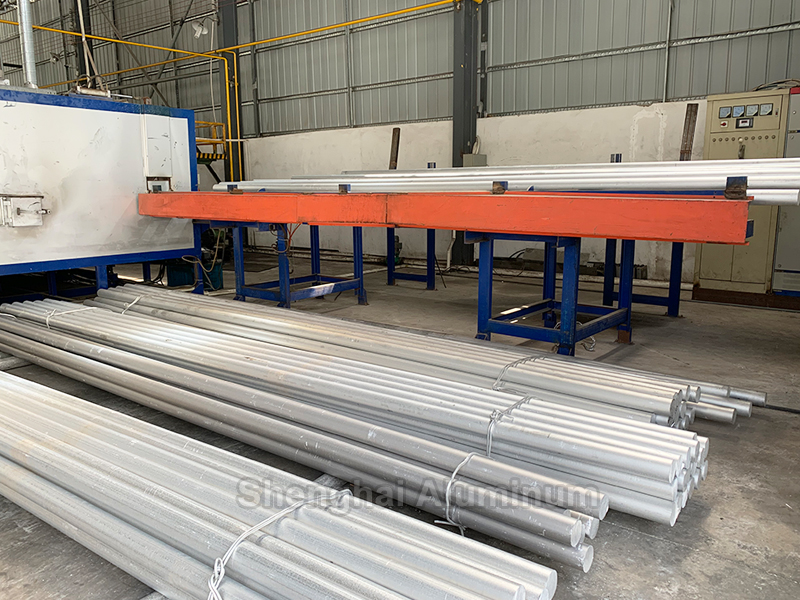
2. Heating Aluminum Round Rod
Heating Aluminium round bar must control the temperature. Heating process should be carried out at room temperature. After 3.5h heating, the temperature will reach around 400-500℃.No matter the temperature is too high or too low, it will directly affect the hardness of the profiles. Therefore, the temperature must be strictly controlled during the heating and cooling process.
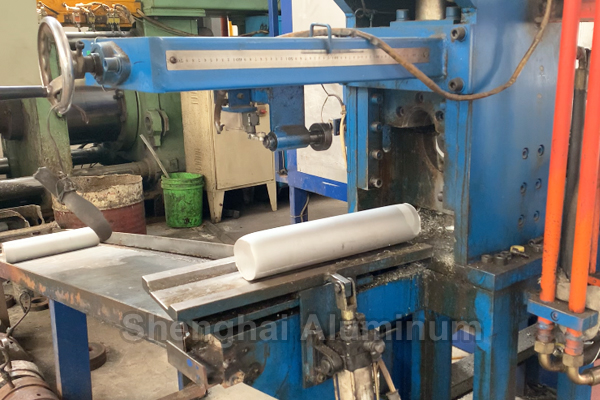
3. Heating Mold
The temperature of heating mold should be same as heating Aluminum Rod, both to keep warm after heating to 400-500°C
4. Prepare Mold
After the mold and Aluminum Rod are heated and insulated. Put the mold into the extrusion machine and prepare for extrusion
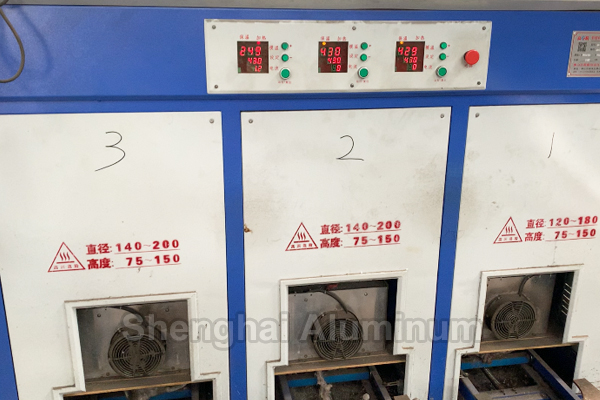
5. Transfer the Aluminum Round Rod to the extrusion machine
Put the ready Aluminum Rod into the raw material entrance of the extrusion machine, before extrusion, You can smear some release agent thing on the extrusion machine to prevent the billet and ram from sticking together
6. Billet Material (Aluminum Rod) Extrusion
Waiting for the extruded aluminum profile come out from the discharge port
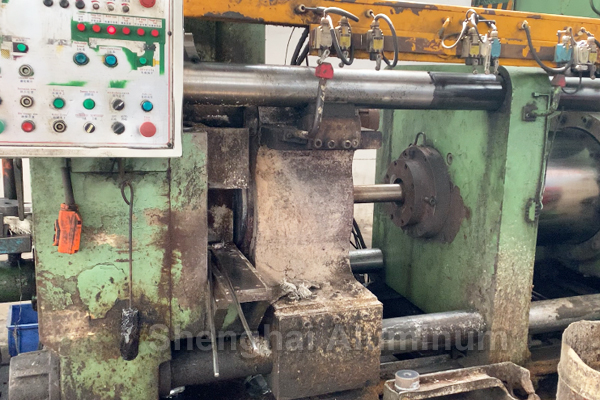
7. Cutting Extruded Aluminium Profile
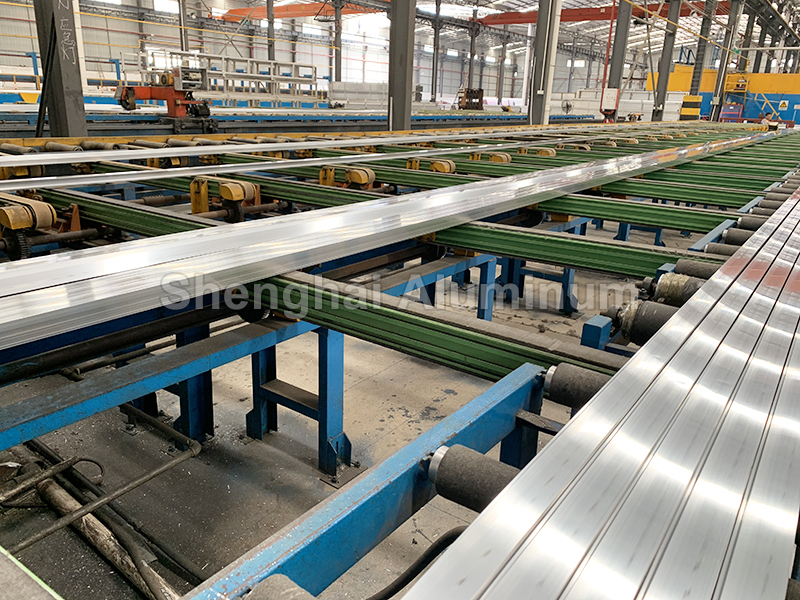
Use tractor to drag the extruded aluminum profile into the precise saw and then cut into the required length
8. Straighten Extruded Aluminium Profile
After cutting, Put the aluminum profile to leveling table for stretching and straightening. And then go to finished product area for final Fixed length cutting
9. Heating Treatment
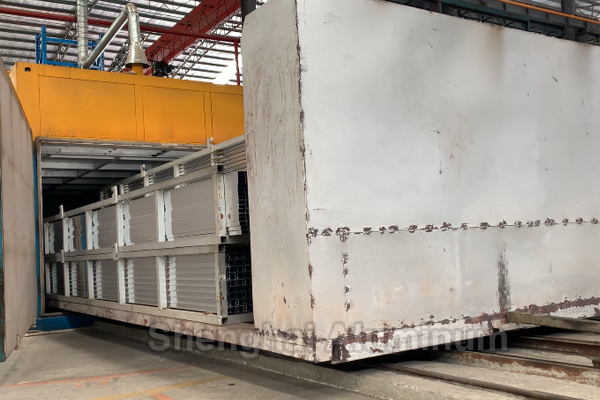
Load the ready aluminum profiles into the frame, and then transfer to the heating machine for heating treatment. Keep warm 2 hours after the temperature reaches 200°C, andthen wait to release. Heat treatment can increase the stretch and plasticity of aluminum profiles
10. Cooling
After heating then cooling, It has two ways, natural cooling or Air cooling. Finally perfectly meet customer needs.
Aluminium Profile Extrusion is a process that extrude heated aluminum rod based on every molds to become specific kinds of shapes for customers. The shapes might be solid, hollow or semi-hollow. They might be very simple or complex. Generally, the aluminum profile extrusion will be slotted extrusion, aluminium profile tube and aluminium channel profiles etc.
If you want to know more about Aluminium Profile Extrusion, Welcome to visit our website : https://www.shenghai-alu.com/catalog