How to Choose the Right Aluminum Tile Trim Size
Updated: 23 Jun 2026
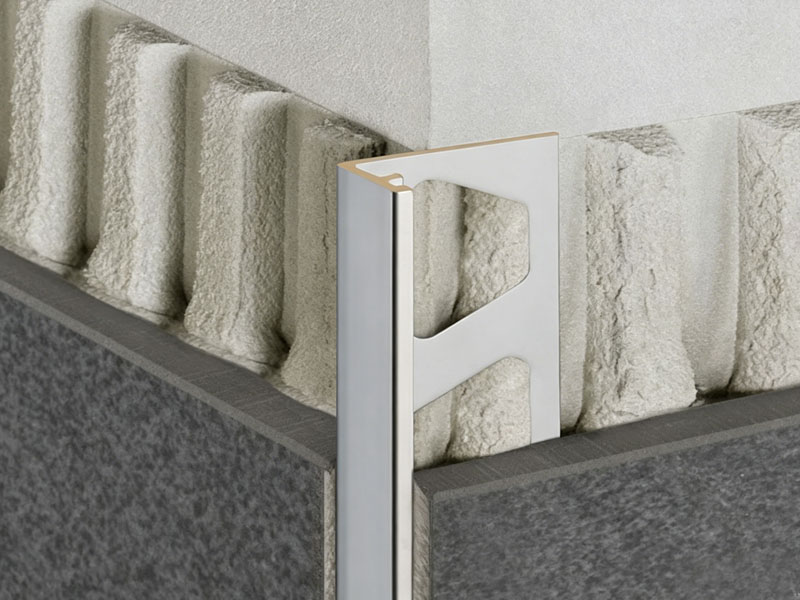
Aluminum tile trim is used not only to protect tile edges and prevent chipping or scratching, but also to improve the overall look and finish of a space. Choosing the right trim size should not be based only on experience. It needs to be measured carefully based on tile thickness, installation position, and actual use.
How to Quickly Determine the Right Aluminum Tile Trim Size
1. Tile thicknessTile thickness is the most important factor when choosing the right aluminum tile trim size. The height of the trim (the vertical part that covers the tile edge) should match the total thickness of the tile plus adhesive. In most cases, it is better to choose a size that is equal to or slightly larger than the tile thickness, so there is enough space for tile glue and installation tolerance.
If the trim size is too small, it will not fully cover the tile edge. This can leave the edge exposed, affect the appearance, and increase the risk of chipping and scratches. On the other hand, if the trim size is too large, the trim may not sit tightly against the tile. It can cause gaps, lifting edges, or an uneven step look, which will affect the final installation result.
We once had a case with a customer from the Philippines. When selecting tile trim aluminum, the customer considered only the tile thickness and ignored the adhesive thickness. After installation, the trim did not align with the tile surface, and there was a clear height difference. In the end, the customer had to re-measure the real installation thickness and adjust the trim size. This shows that when choosing trim size, you must consider not only the tile thickness, but also the adhesive layer and possible installation errors.
To ensure a strong, clean, and good looking finish, it is usually recommended to choose a trim that is 1–1.5mm higher than the tile thickness for wall tiles, and 1.5–2mm higher for floor tiles. This extra space helps fit the tile glue and installation differences, and makes the trim sit better with the tile edge.
2. Tile layout method
Besides tile thickness, the laying pattern and design style of the space also affect the choice of tile trim size. Straight laying usually works well with narrow trims of 5–8mm, giving a clean and simple look. For more complex patterns such as staggered or herringbone layouts, wider trims of 10mm or above are often used to create a stronger design effect and add depth to the space.
Trim size should also match the room size and application. Large tiles or commercial spaces usually need wider trims, while small spaces and minimalist designs are better suited for narrow profiles. In areas with more impact or moisture, such as corridors, kitchens, and bathrooms, it is better to use trims that fully cover the tile edge for better protection and appearance.
3. Edge position and installation
When using aluminum trim for tiles, installation position and edge finishing method are also very important, and they directly affect the size selection.
In general, wall applications often use 8–10mm trims. These are lighter and have thinner lines, which make the wall look clean and simple. For floors or high-wear areas, 10–12mm trims are more suitable because they are stronger and more durable for long-term use and foot traffic.
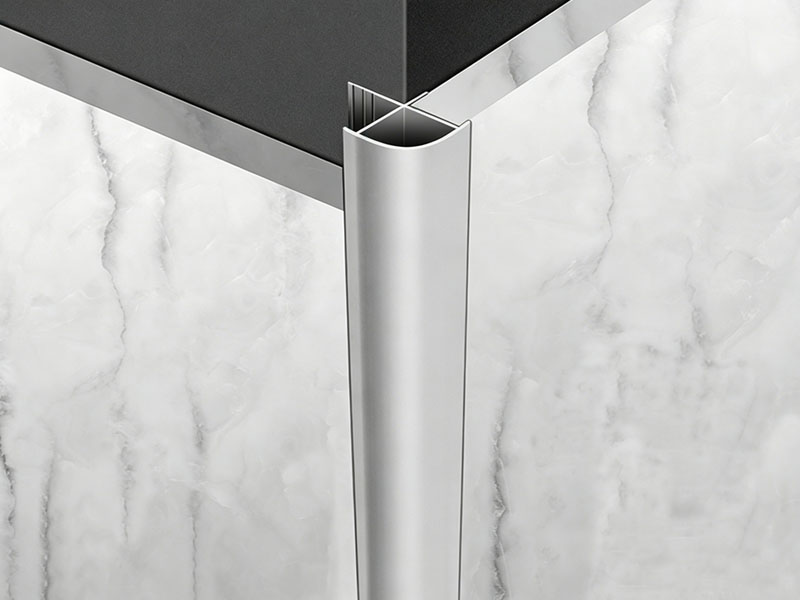
Different edge conditions also require different trim types. For outside corners (external edges), L-shaped aluminum trims are usually selected based on tile thickness and corner angle. For transitions between different materials such as tile and wood or stone, 12–15mm transition trims are commonly used to create a smooth connection and protect the edges.
If the wall or floor surface is not perfectly even, it is also better to choose a slightly larger trim size. This helps reduce gaps and avoids installation problems after fitting.
Which Type of Aluminum Tile Trim to Choose
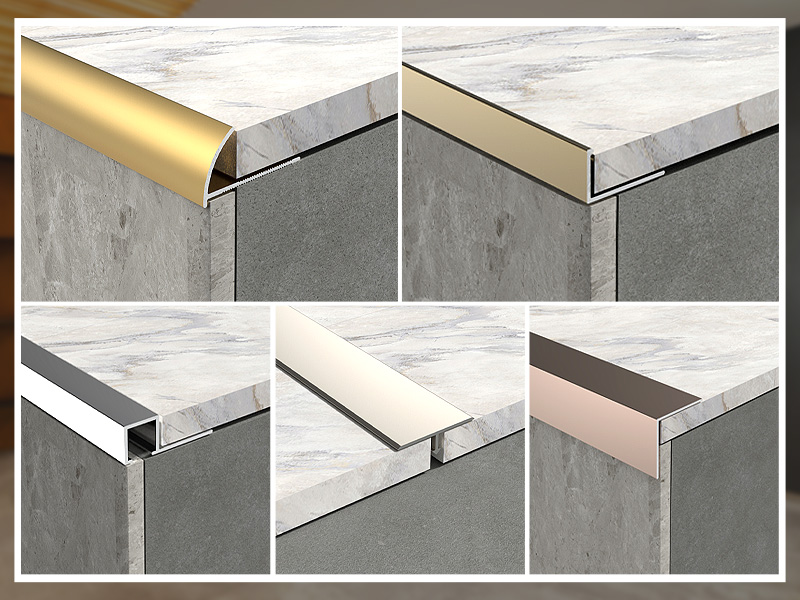
When choosing aluminum tile trim, a thicker tile does not always require a larger trim size. Besides tile thickness, you should also consider the installation position and the overall design style. In general, thin tiles of 6-8mm work well with slimmer trim profiles, while floor tiles, sintered stone, and thicker tiles of 10-12mm or above are better matched with taller and more protective profiles. The final choice of trim type depends on the specific application.L-Shaped Trim
L-shaped trim is one of the most widely used aluminum tile trims and is suitable for almost all standard tile thicknesses. It directly covers the exposed tile edge, so it is often used on outside corners, window sills, door openings, and half-wall edges.
For example, 6-8mm thin tiles can be matched with 8mm L-shaped trim. Wall and floor tiles of 8-10mm usually use 10mm trim, while 12mm thick tiles or rustic tiles are better matched with 12mm or larger sizes to make sure the tile edge is fully covered.
J-Profile Trim
If you want to hide the cut edge of the tile and create a cleaner finish, J-profile trim is usually a better choice. Its wrap-around design completely covers the tile edge, so it is often used for kitchen backsplashes, bathroom wall tiles, and TV background walls.
For wall tiles and standard 8-12mm floor tiles, J-profile trim offers both protection and decoration. However, it is generally not recommended for thin tiles around 6mm because the metal edge may look too wide and affect the overall appearance.
Flat Edge Trim
The main feature of flat edge trim is its slim, simple appearance. It is especially suitable for modern minimalist styles, cream-style interiors, and two-tone wall designs.
Thin 6-8mm tiles and small wall tiles are ideal for this type of trim because they make the edge look lighter and more refined. For large-format tiles and thick tiles above 12mm, flat edge trim is usually not recommended because of its limited profile height.
Bullnose Trim
Bullnose trim has a rounded edge design that helps reduce the risk of bumps and scratches. It is often used on stair steps, hallways, children’s rooms, and commercial spaces with heavy use.
For projects using floor tiles, sintered stone, or natural stone above 10mm, bullnose trim not only provides better edge protection but also creates a smoother transition between the thick tile and the surrounding space.
Transition Strip
A transition strip is not only used for tile edging. It is specifically designed to connect different flooring materials, such as tile, wood, and stone, as well as threshold areas with different heights.
Whether the tile is 8mm, 10mm, or 12mm thick, a transition strip can be used. The size should be selected according to the actual height difference between the two materials. The larger the height difference, the larger the transition strip required to create a smooth and safe transition.
Shenghai Aluminum is an aluminum extrusion manufacturer in China, and decorative aluminum trim strips are one of our best-selling export products. Based on our production and project experience, we can quickly recommend suitable trim types according to tile thickness.
* For 6-8mm thin tiles: Flat Edge Trim or small-size L-Shaped Trim is usually the best choice.
* For 8-10mm standard wall tiles: L-Shaped Trim and J-Profile Trim are the most common options.
* For 10-12mm floor tiles: Large-size L-Shaped Trim or Bullnose Trim is more suitable.
* For thick tiles, sintered stone, and transitions between different materials: Bullnose Trim or Transition Strip is usually recommended.
No matter which aluminum tile edge you choose, you should first measure the actual tile thickness and then consider the adhesive thickness, installation position, and design style. Only when the trim matches the tile size and application can you achieve an attractive, durable finish.
Popular Sizes and Colors of Aluminum Trim For Tile
Aluminum trim for tiles is one of the most widely used decorative profiles in residential and commercial projects. For distributors and project buyers, choosing the right size and color at the beginning can make product selection easier and reduce unnecessary communication during the purchasing process.
Based on years of experience in aluminum extrusion and project supply, Shenghai Aluminum has summarized the most commonly selected sizes and finishes below for your reference.
|
Tile Thickness |
Recommended Trim Height |
Color |
Application |
|
6mm tile |
8mm |
Brushed Silver, Matte Black |
Walls |
|
8mm tile |
10mm |
Matte Black, Brushed Silver, Champagne Gold |
Residential |
|
9-10mm tile |
10mm or 12mm |
Matte Black, Brushed Silver, Brushed Gold |
Living rooms, kitchens |
|
11-12mm tile |
12mm |
Champagne Gold, Brushed Gold, Gunmetal Gray |
Hotels, marble projects |
|
14-15mm tile |
15mm |
Brushed Gold, Bronze, Gunmetal Gray |
Porcelain and thick tiles |
|
18-20mm stone tile |
20mm |
Brushed Gold, Matte Black |
Stone |
Among these options, 10mm and 12mm are the most popular sizes, while Matte Black, Brushed Silver, and Champagne Gold remain the preferred finishes in many markets.
In addition to these standard specifications, Shenghai Aluminum also offers custom sizes, colors, surface finishes, and profile designs to meet different project requirements and market needs.