Does Aluminum Make a Good Heat Sink
Updated: 27 May 2026
Aluminum is one of the most widely used materials for heat sinks, as it strikes an excellent balance across key attributes such as thermal conductivity, weight, cost, corrosion resistance, and manufacturability.
For industries ranging from electronics, LED lighting, and industrial equipment to power supply units, electric vehicle charging systems, and automation equipment, aluminum heat sinks are often the preferred solution for thermal management.
The choice of heat sink material depends on the product requirements, such as heat dissipation performance, product weight, manufacturing process, and product structure.
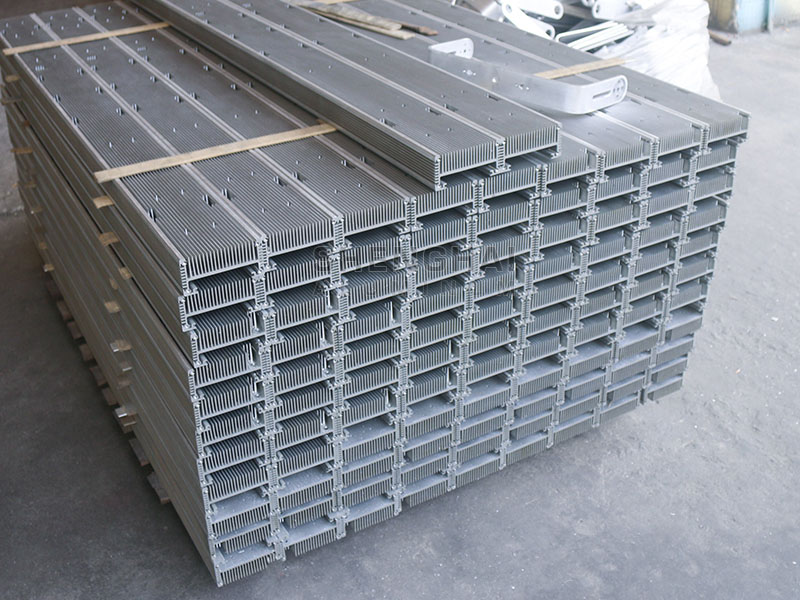
The primary purpose of a heat sink is to transfer heat away from sensitive components as quickly as possible.
Aluminum offers strong thermal conductivity, typically around:
k_{Aluminum} \approx 205\ \mathrm{W/(m\cdot K)}
This allows heat generated by electronic components to spread rapidly across the aluminum surface and dissipate into surrounding air.
Although copper has higher conductivity, aluminum provides a far better balance between performance and practicality for most commercial products.
2. Lightweight Material
Compared with copper, aluminum is significantly lighter.
This is especially important for:
LED lighting systems
Telecom equipment
Automotive electronics
Wall-mounted enclosures
Portable devices
Industrial control systems
A lighter aluminum heat sink reduces overall product weight and makes installation easier.
3. Excellent Extrusion Capability
One of aluminum’s biggest advantages is that it can be easily extruded into complex heat sink profiles.
This allows manufacturers to create:
Thin cooling fins
Deep fin structures
Multi-channel designs
Integrated mounting slots
Customized electronic enclosure profiles
Extruded aluminium heat sinks can combine both structural and cooling functions into a single component, reducing assembly complexity and manufacturing costs.
For many OEM manufacturers, this is a major advantage over copper machining.
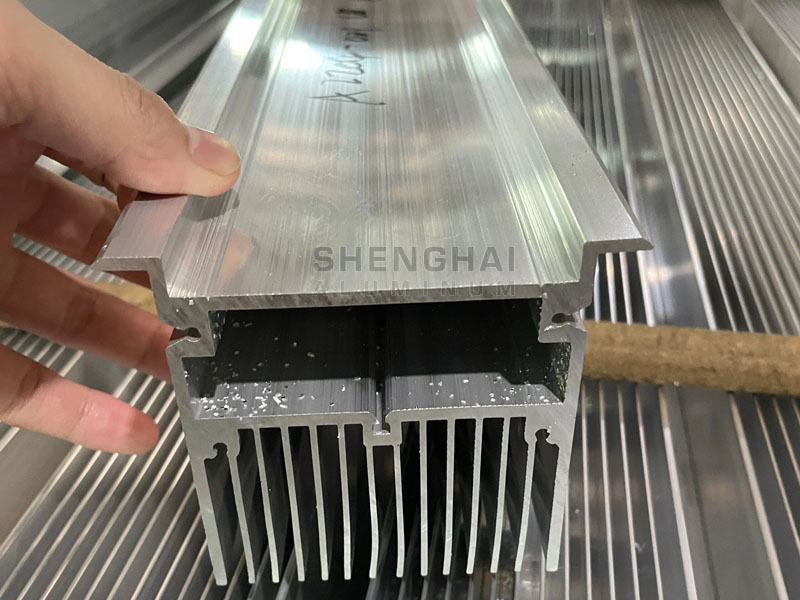
Extrusion technology enables aluminium heat sinks to be customised to meet different thermal requirements.
Straight Fin Heat Sink
Suitable for natural convection cooling.
Pin Fin Heat Sink
Improves airflow performance in multi-directional cooling environments.
Skived Fin Heat Sink
Used when higher fin density is required.
Integrated Enclosure Heat Sink
The enclosure itself acts as the heat dissipation structure.
· Power supply housings
· Inverter enclosures
· LED driver boxes
· Industrial controllers
Thermal Conductivity vs Copper Heat Sink
When selecting heat sinks, aluminum and copper are typically compared based on factors such as thermal conductivity, weight, cost, and application scenarios. Below are the main differences between them:
Copper transfers heat faster, but aluminum is often preferred because it:
Costs less
Is easier to extrude
Is lighter
Resists corrosion well
Supports large-scale production
For most electronic applications, aluminum provides sufficient cooling performance without the higher cost of copper.
1. Optimizing Aerodynamics and Dissipation Efficiency
The height, thickness, and spacing of a heat sink's fins directly influence the airflow path.
If the fins are spaced too closely, air resistance increases, thereby reducing airflow efficiency.
Conversely, if the spacing is too wide, the effective surface area available for heat dissipation is reduced.
Therefore, a balance must be struck between "dissipation surface area" and "airflow unobstructedness" to ensure uniform airflow through the fins, thereby enhancing overall heat transfer efficiency.
2. Matching the Cooling Method (Natural Convection vs. Forced Air Cooling)
Different cooling methods impose different structural requirements on the heat sink:
Natural Convection Cooling
Relies on the natural movement of air; therefore, it requires:
Wider fin spacing
Greater surface area
Structural optimization in the vertical direction (to facilitate the rise of hot air)
Forced Air Cooling (Fan-assisted Cooling)
Relies on driven airflow; thus, it can utilize:
Higher fin density
More compact structural designs
Applications involving higher power densities
Appropriately matching the cooling method to the application is key to maximizing system thermal efficiency.
3. Eliminating Thermal Bottlenecks (Hot Spot Management)
Thermal design involves more than just the "heat sink itself"; it must also account for the distribution of heat sources.
Whether heat sources on the PCB are concentrated or dispersed
Whether the structure features a single high-temperature point or multiple distinct hot spots
Whether the contact between the heat sink and the heat source is uniform
Additionally, selecting Thermal Interface Materials (TIMs—such as thermal grease or thermal pads) is critical.
If contact is poor, a "thermal bottleneck" will form—even if the heat sink itself performs well.
4. Balancing Performance, Lifespan, and Cost
Heat sink design should not merely pursue peak performance in isolation, but must also consider practical application value.
For instance, in electronic devices:
High-efficiency aluminum heat sinks are typically sufficient to meet the requirements of most applications
Compared to copper or liquid-cooling solutions, aluminum structures are lighter and more cost-effective
They also offer distinct advantages in terms of reliability and maintenance costs
Consequently, the appropriate solution should be selected based on the product's specific positioning and requirements, rather than simply chasing the absolute highest heat dissipation capacity.
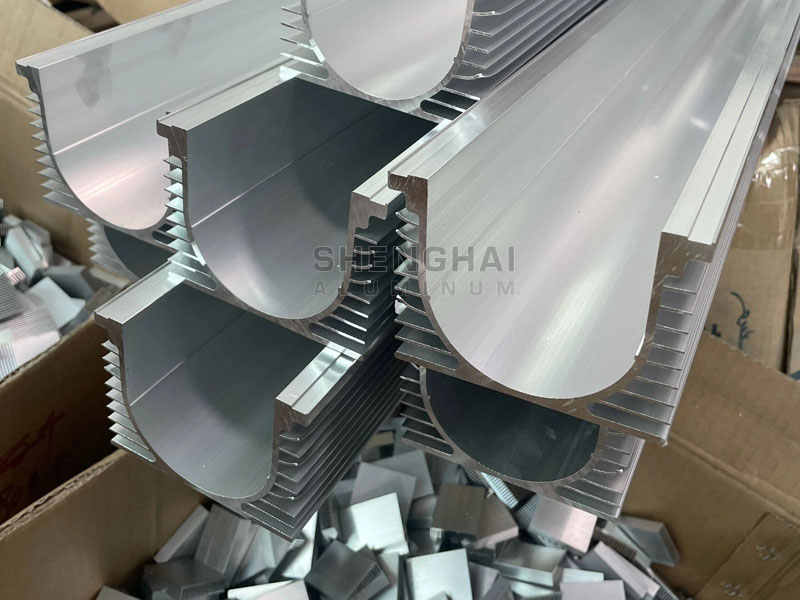
Proper surface treatment helps heat sinks maintain stable thermal performance in high-temperature, humid, outdoor, and industrial environments. As a result, it has become an essential part of the heat sink manufacturing process.
Key Functions of Surface Treatment
1. Enhancing Heat Dissipation Efficiency:
Surface treatments can reduce thermal resistance, boost thermal radiation, and optimize air convection.
For instance, processes such as black anodising and high-emissivity coating applications can significantly improve heat dissipation performance, making them widely used in LED heat sinks and electronic cooling modules.
2. Improving Corrosion Resistance:
Aluminum and copper are prone to oxidation and corrosion over time.
Anodizing enhances the corrosion resistance and wear resistance of aluminum, while nickel plating prevents the oxidation of copper, thereby maintaining stable thermal conductivity.
3. Extending Service Life:
Treatments such as hard anodising and micro-arc oxidation (MAO) increase surface hardness, minimising wear, scratches, and dust accumulation, thereby helping prevent degradation in heat dissipation performance over time.
4. Meeting Specific Functional Requirements:
Certain surface treatments offer additional functionalities, such as electrical insulation, anti-fouling properties, enhanced solderability, and EMI (electromagnetic interference) c shielding, making them suitable for use in electronic devices, power supplies, and industrial equipment.
5. Enhancing Product Aesthetics and Quality:
Processes such as sandblasting, brushed finishing, and anodizing can enhance the metallic texture and perceived quality of a product while also facilitating the easy application of logos, brand identifiers, and other markings.
6. Adapting to Specific Environments:
For applications involving high temperatures, outdoor exposure, marine environments, chemical processing, or cleanroom settings, specialized coatings, such as those offering high-temperature resistance, salt spray protection, or UV resistance, can be applied to enhance the product’s environmental adaptability.
Nickel Plating
Powder Coating
Electrophoresis
Sandblasting
Brushed Finish
Micro-Arc Oxidation (MAO)
Thermal Coating
Different processes are selected to suit specific heat dissipation requirements, product positioning, and operating environments.
Common Applications of Aluminum Heat Sinks
LED lighting systems
Power supplies
Motor drivers
Battery systems
Solar inverters
Automotive electronics
Telecom equipment
Industrial automation
CNC controllers
Audio amplifiers
Medical devices
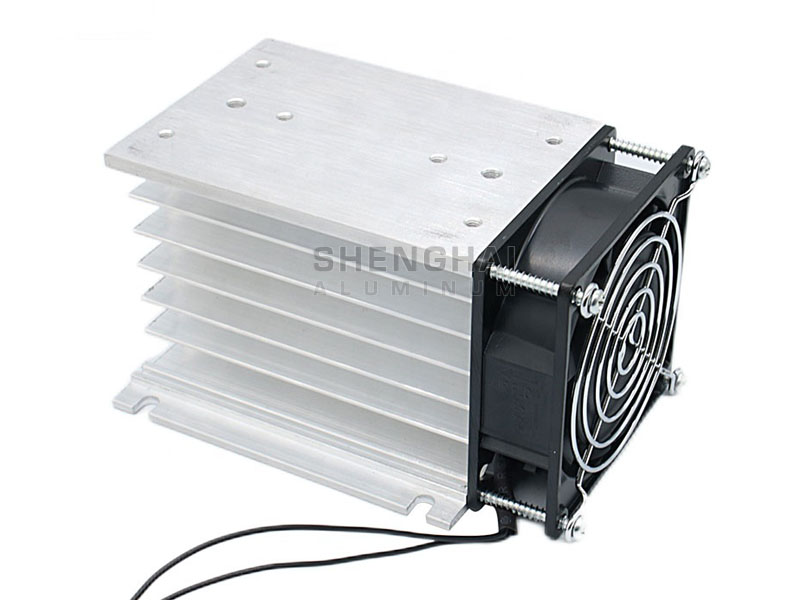
Thermal performance requirements
Product dimensions
Installation methods
CNC machining needs
Surface finishes
Assembly structures
Our customization capabilities include:
CNC drilling
Milling
Thread tapping
Cutouts
Integrated enclosure designs
Logo engraving
For OEM electronic products, custom extruded aluminum heat sinks not only improve heat dissipation performance but also enhance the overall product appearance and assembly efficiency.
For industries ranging from electronics, LED lighting, and industrial equipment to power supply units, electric vehicle charging systems, and automation equipment, aluminum heat sinks are often the preferred solution for thermal management.
The choice of heat sink material depends on the product requirements, such as heat dissipation performance, product weight, manufacturing process, and product structure.
Why Aluminum Is Commonly Used for Aluminum Heat Sink
1. Good Thermal ConductivityThe primary purpose of a heat sink is to transfer heat away from sensitive components as quickly as possible.
Aluminum offers strong thermal conductivity, typically around:
k_{Aluminum} \approx 205\ \mathrm{W/(m\cdot K)}
This allows heat generated by electronic components to spread rapidly across the aluminum surface and dissipate into surrounding air.
Although copper has higher conductivity, aluminum provides a far better balance between performance and practicality for most commercial products.
2. Lightweight Material
Compared with copper, aluminum is significantly lighter.
This is especially important for:
LED lighting systems
Telecom equipment
Automotive electronics
Wall-mounted enclosures
Portable devices
Industrial control systems
A lighter aluminum heat sink reduces overall product weight and makes installation easier.
3. Excellent Extrusion Capability
One of aluminum’s biggest advantages is that it can be easily extruded into complex heat sink profiles.
This allows manufacturers to create:
Thin cooling fins
Deep fin structures
Multi-channel designs
Integrated mounting slots
Customized electronic enclosure profiles
Extruded aluminium heat sinks can combine both structural and cooling functions into a single component, reducing assembly complexity and manufacturing costs.
For many OEM manufacturers, this is a major advantage over copper machining.
Why Extruded Aluminum Heat Sinks Are Popular
Extrusion technology enables aluminium heat sinks to be customised to meet different thermal requirements.
Straight Fin Heat Sink
Suitable for natural convection cooling.
Pin Fin Heat Sink
Improves airflow performance in multi-directional cooling environments.
Skived Fin Heat Sink
Used when higher fin density is required.
Integrated Enclosure Heat Sink
The enclosure itself acts as the heat dissipation structure.
· Power supply housings
· Inverter enclosures
· LED driver boxes
· Industrial controllers
Thermal Conductivity vs Copper Heat Sink
When selecting heat sinks, aluminum and copper are typically compared based on factors such as thermal conductivity, weight, cost, and application scenarios. Below are the main differences between them:
|
Material |
Thermal Conductivity |
Weight |
Cost |
Machinability |
|
Aluminum |
Good |
Lightweight |
Lower |
Excellent |
|
Copper |
Excellent |
Heavy |
Higher |
More difficult |
Copper transfers heat faster, but aluminum is often preferred because it:
Costs less
Is easier to extrude
Is lighter
Resists corrosion well
Supports large-scale production
For most electronic applications, aluminum provides sufficient cooling performance without the higher cost of copper.
What Factors Must Be Considered When Designing Aluminum Heat Sinks
In the practical design of thermal management systems, the performance of an aluminum heat sink depends not solely on the material itself but requires comprehensive optimization that integrates structural design, cooling methods, and overall system thermal management. A well-engineered design can significantly boost heat dissipation efficiency and minimize system temperature rise.1. Optimizing Aerodynamics and Dissipation Efficiency
The height, thickness, and spacing of a heat sink's fins directly influence the airflow path.
If the fins are spaced too closely, air resistance increases, thereby reducing airflow efficiency.
Conversely, if the spacing is too wide, the effective surface area available for heat dissipation is reduced.
Therefore, a balance must be struck between "dissipation surface area" and "airflow unobstructedness" to ensure uniform airflow through the fins, thereby enhancing overall heat transfer efficiency.
2. Matching the Cooling Method (Natural Convection vs. Forced Air Cooling)
Different cooling methods impose different structural requirements on the heat sink:
Natural Convection Cooling
Relies on the natural movement of air; therefore, it requires:
Wider fin spacing
Greater surface area
Structural optimization in the vertical direction (to facilitate the rise of hot air)
Forced Air Cooling (Fan-assisted Cooling)
Relies on driven airflow; thus, it can utilize:
Higher fin density
More compact structural designs
Applications involving higher power densities
Appropriately matching the cooling method to the application is key to maximizing system thermal efficiency.
3. Eliminating Thermal Bottlenecks (Hot Spot Management)
Thermal design involves more than just the "heat sink itself"; it must also account for the distribution of heat sources.
Whether heat sources on the PCB are concentrated or dispersed
Whether the structure features a single high-temperature point or multiple distinct hot spots
Whether the contact between the heat sink and the heat source is uniform
Additionally, selecting Thermal Interface Materials (TIMs—such as thermal grease or thermal pads) is critical.
If contact is poor, a "thermal bottleneck" will form—even if the heat sink itself performs well.
4. Balancing Performance, Lifespan, and Cost
Heat sink design should not merely pursue peak performance in isolation, but must also consider practical application value.
For instance, in electronic devices:
High-efficiency aluminum heat sinks are typically sufficient to meet the requirements of most applications
Compared to copper or liquid-cooling solutions, aluminum structures are lighter and more cost-effective
They also offer distinct advantages in terms of reliability and maintenance costs
Consequently, the appropriate solution should be selected based on the product's specific positioning and requirements, rather than simply chasing the absolute highest heat dissipation capacity.
Why do Aluminum Heat Sinks Need Surface Treatment
For aluminium heat sinks, copper heat sinks, and electronic enclosures, surface treatment does more than improve appearance. It also affects heat dissipation, corrosion resistance, product lifespan, and device stability.Proper surface treatment helps heat sinks maintain stable thermal performance in high-temperature, humid, outdoor, and industrial environments. As a result, it has become an essential part of the heat sink manufacturing process.
Key Functions of Surface Treatment
1. Enhancing Heat Dissipation Efficiency:
Surface treatments can reduce thermal resistance, boost thermal radiation, and optimize air convection.
For instance, processes such as black anodising and high-emissivity coating applications can significantly improve heat dissipation performance, making them widely used in LED heat sinks and electronic cooling modules.
2. Improving Corrosion Resistance:
Aluminum and copper are prone to oxidation and corrosion over time.
Anodizing enhances the corrosion resistance and wear resistance of aluminum, while nickel plating prevents the oxidation of copper, thereby maintaining stable thermal conductivity.
3. Extending Service Life:
Treatments such as hard anodising and micro-arc oxidation (MAO) increase surface hardness, minimising wear, scratches, and dust accumulation, thereby helping prevent degradation in heat dissipation performance over time.
4. Meeting Specific Functional Requirements:
Certain surface treatments offer additional functionalities, such as electrical insulation, anti-fouling properties, enhanced solderability, and EMI (electromagnetic interference) c shielding, making them suitable for use in electronic devices, power supplies, and industrial equipment.
5. Enhancing Product Aesthetics and Quality:
Processes such as sandblasting, brushed finishing, and anodizing can enhance the metallic texture and perceived quality of a product while also facilitating the easy application of logos, brand identifiers, and other markings.
6. Adapting to Specific Environments:
For applications involving high temperatures, outdoor exposure, marine environments, chemical processing, or cleanroom settings, specialized coatings, such as those offering high-temperature resistance, salt spray protection, or UV resistance, can be applied to enhance the product’s environmental adaptability.
Common Surface Treatment Processes for Heat Sinks
AnodizingNickel Plating
Powder Coating
Electrophoresis
Sandblasting
Brushed Finish
Micro-Arc Oxidation (MAO)
Thermal Coating
Different processes are selected to suit specific heat dissipation requirements, product positioning, and operating environments.
Common Applications of Aluminum Heat Sinks
LED lighting systems
Power supplies
Motor drivers
Battery systems
Solar inverters
Automotive electronics
Telecom equipment
Industrial automation
CNC controllers
Audio amplifiers
Medical devices
Can Aluminum Heat Sinks Be Customized
At Shenghai Aluminum, we provide custom aluminum heat sink solutions based on different project requirements, including:Thermal performance requirements
Product dimensions
Installation methods
CNC machining needs
Surface finishes
Assembly structures
Our customization capabilities include:
CNC drilling
Milling
Thread tapping
Cutouts
Integrated enclosure designs
Logo engraving
For OEM electronic products, custom extruded aluminum heat sinks not only improve heat dissipation performance but also enhance the overall product appearance and assembly efficiency.