Aluminum vs. Steel Roller Shutters: Which Is Better
Updated: 8 Oct 2026
Aluminum roller shutters are usually a better choice for lightweight operation, corrosion resistance and low maintenance. Steel roller shutters are often preferred for heavy-duty security and industrial applications.
The right choice depends on where the shutter will be installed, how often it will be used and what level of protection is needed.
This guide compares aluminum and steel roller shutters to help you choose the right material for your project.
|
Feature |
Aluminum Roller Shutters |
Steel Roller Shutters |
|
Weight |
Lightweight |
Heavier |
|
Strength |
Good for many everyday applications |
Generally higher impact resistance |
|
Security |
Suitable for homes and shops |
Often preferred for heavy-duty security |
|
Rust resistance |
Naturally corrosion-resistant |
Needs protective coating |
|
Insulation |
Insulated designs available |
Insulated designs available |
|
Maintenance |
Generally lower |
May require more rust prevention |
|
Cost |
Depends on profile and finish |
Often lower initial material cost |
|
Best for |
Homes, shops, coastal buildings |
Warehouses, factories, industrial doors |
Both materials can perform well when the shutter is properly designed and installed. The differences become clearer when we look at how they are used.
What to Consider When Choosing Aluminum or Steel Roller Shutters
Weight and Daily Operation
One of the main advantages of aluminum roller shutters is their light weight.Aluminum is much lighter than steel when comparing the same volume of material. This can make shutters easier to handle, install and operate.
A lighter shutter can also reduce the load on the motor and other operating parts.
This is especially useful for:
Residential windows and garage doors
Retail shops that open and close daily
Commercial entrances with frequent use
Steel shutters are heavier, but they can still operate smoothly with a properly sized motor and supporting system.
For shutters that open and close frequently, aluminum is often the more convenient option.
Strength and Security
Steel is generally stronger and more resistant to heavy impact than aluminum. This makes it a common choice for industrial buildings and locations with higher security requirements.However, aluminum roller shutters can also provide good protection.
Their strength depends on the design and thickness of the shutter slats, as well as the guide rails and locking system.
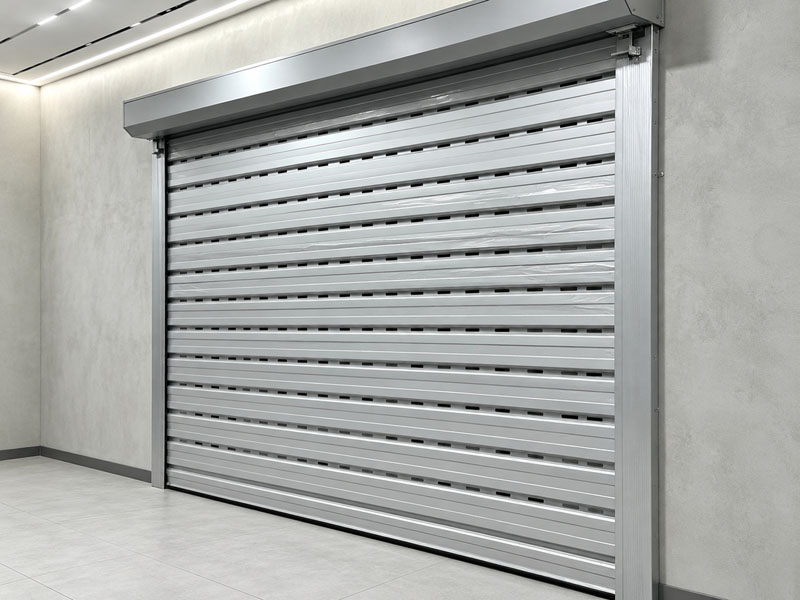
For example, reinforced extruded aluminum profiles can be used to make shutters for shops and commercial buildings.
When comparing security, consider the complete shutter system rather than the material alone.
For high-security industrial entrances, steel may be the better option. For many residential and commercial applications, a properly designed aluminum shutter can provide suitable protection.
Rust Resistance and Outdoor Use
Weather conditions are important when choosing roller shutter materials.Aluminum naturally resists corrosion, making it a practical choice for outdoor shutters exposed to rain and humidity.
It can also be anodized or powder-coated for additional surface protection and different color options.
Steel shutters are usually galvanized or painted to help prevent rust. However, if the protective coating becomes damaged, the exposed steel may begin to corrode.
This can be a concern in coastal areas or places with high humidity.
For example, roller shutters installed on buildings near the sea may need better corrosion protection than shutters used inside a warehouse.
Aluminum is often a good choice for coastal and humid environments because it generally requires less rust-related maintenance.
The complete shutter system, including its fasteners and guide rails, should also be suitable for the local environment.
Thermal Insulation and Noise Reduction
Both aluminum and steel roller shutters can help block sunlight and reduce outside noise.However, the insulation performance depends more on the shutter design than the metal itself.
Some aluminum roller shutters use double-wall slats filled with insulating foam. These can help improve thermal and sound insulation compared with basic single-wall designs.
Steel shutters are also available with insulated slats.
If insulation is important, check:
Whether the slats are insulated
The type and thickness of the insulation
How well the shutter closes and seals
The overall shutter system design
For homes, offices and shops in hot climates, insulated roller shutters may help reduce heat entering through windows and openings.
Neither aluminum nor steel is automatically better for insulation. The complete shutter design matters most.
Maintenance and Long-Term Cost
The initial price is not the only cost to consider when buying roller shutters.Steel may have a lower material cost for some standard designs. However, it may require more attention to prevent rust, especially in outdoor environments.
Aluminum roller shutters generally need less rust-related maintenance.
Regular cleaning and checks of the guide rails, motor and moving parts are still necessary.
Over time, maintenance, repairs and replacement parts can affect the total cost of the shutter.
For projects in humid or coastal areas, aluminum may offer better long-term value because of its corrosion resistance.
For heavy-duty industrial use, steel may be more economical when greater impact resistance is required.
Which Material Is Best for Different Applications
The best roller shutter material depends on the building and its intended use.|
Application |
Suggested Material |
Main Reason |
|
Residential windows |
Aluminum |
Lightweight and easy to operate |
|
Garage doors |
Aluminum or steel |
Depends on size and security needs |
|
Retail shops |
Aluminum or steel |
Depends on security and daily use |
|
Warehouses |
Steel |
Suitable for heavy-duty protection |
|
Industrial entrances |
Steel |
Often preferred for higher impact resistance |
|
Coastal buildings |
Aluminum |
Better natural corrosion resistance |
|
Hot-climate buildings |
Insulated aluminum or steel |
Insulation design is more important than metal type |
What Should You Check Before Buying Roller Shutters
Once you have chosen a material, there are a few more details to confirm.For manufacturers, distributors and project buyers, these specifications can affect both product performance and cost.
Opening size
Measure the width and height of the opening. Larger shutters may need stronger slats, guide rails and supporting parts.
Shutter profile
Check the slat shape, thickness and construction. Aluminum shutters may use extruded, roll-formed or foam-filled profiles, depending on the application.
Operating method
Decide whether the shutter will be operated manually or by an electric motor. The shutter weight and size will affect the operating system.
Surface finish
Choose a finish suitable for the installation environment. Powder coating and anodizing are common options for aluminum profiles.
Security and weather requirements
Consider wind resistance, locking systems, corrosion protection and insulation needs.
For custom projects, a technical drawing or profile sample can help the manufacturer confirm whether the required design can be produced.
Should You Choose Aluminum or Steel Roller Shutter?
Choose aluminum roller shutters when you need a lightweight, corrosion-resistant solution for residential, commercial or coastal applications.Choose steel roller shutters when heavy-duty strength and higher impact resistance are the main priorities.
The most important step is to match the shutter material and design to the actual application.
For roller shutter manufacturers and distributors, selecting the right profile is also important for the performance of the finished shutter.
Shenghai Aluminum manufactures custom aluminum extrusion profiles for roller shutter applications, including profile development, surface finishing and further processing.
You can explore our Aluminum Roller Shutter Profiles or send us your profile drawing and requirements for review.