Aluminum vs. Stainless Steel Glass Railing: Which Is Better
Updated: 26 Aug 2026
Two of the most common choices are aluminum glass railing and stainless steel glass railing. Both can provide a modern appearance and reliable structural performance, but they are suited to different applications.
So, which one is better?
The answer depends on your project requirements, environment, budget, maintenance expectations, and preferred design. This guide compares aluminum and stainless steel glass railings from a buyer’s perspective to help you make a more practical decision.
Aluminum vs. Stainless Steel Glass Railing: Quick Comparison
|
Factor |
Aluminum Glass Railing |
Stainless Steel Glass Railing |
|
Corrosion resistance |
Excellent with proper surface treatment |
Excellent, especially with suitable stainless grades |
|
Weight |
Lightweight |
Heavier |
|
Installation |
Easier and faster |
Generally more labor-intensive |
|
Design flexibility |
High |
High |
|
Surface finishes |
Powder coating, anodizing, etc. |
Brushed, polished, PVD, etc. |
|
Maintenance |
Low |
Low, but may require cleaning |
|
Customization |
Excellent for extruded profiles |
Good, depending on fabrication |
|
Long-term appearance |
Highly customizable |
Premium metallic appearance |
|
Material cost |
Often competitive |
Generally higher |
|
Best suited for |
Residential, commercial, architectural projects |
Premium architectural and demanding applications |
The most important point is that material quality and system design matter as much as the material itself. A poorly designed aluminum railing or low-grade stainless steel railing may perform worse than a properly engineered system made from the other material.
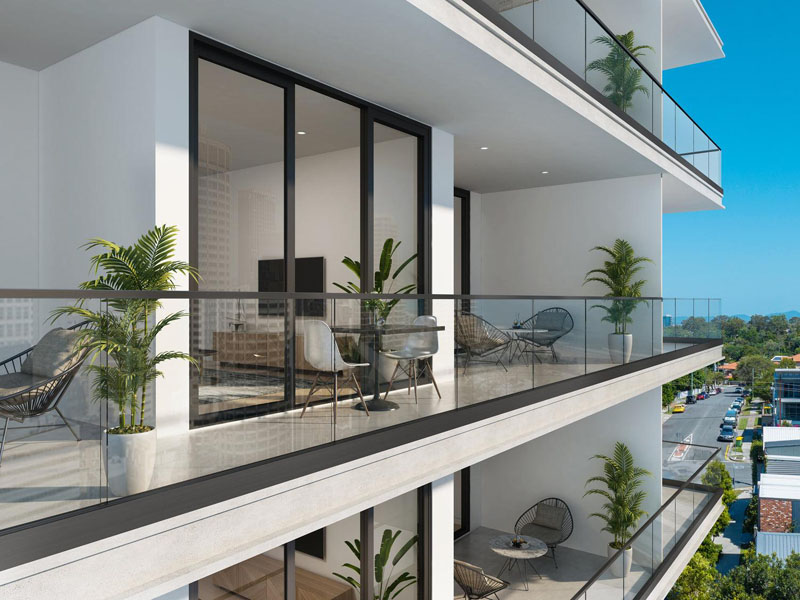
Aluminum vs. Stainless Steel Glass Railing
Corrosion Resistance: Which One Performs Better
Corrosion resistance is one of the first concerns when buying an outdoor glass railing.Aluminum Glass Railing
Aluminum naturally forms a thin oxide layer that helps protect it from corrosion. However, the performance of an aluminum railing system also depends heavily on its surface treatment.
Common options include:
Powder coating
Anodizing
PVDF coating
Wood grain finishes for specific architectural applications
A properly treated aluminum profile can provide excellent resistance to outdoor exposure and is particularly attractive for balconies, terraces, staircases, and other architectural applications.
For coastal environments, however, the manufacturer should consider the aluminum alloy, surface treatment, coating quality, fasteners, and overall system design rather than simply assuming that any aluminum profile will perform equally well.
Stainless Steel Glass Railing
Stainless steel is also highly corrosion resistant, but the grade makes a major difference.
For example, 304 stainless steel is widely used for architectural applications, while 316 stainless steel generally provides better resistance in chloride-rich environments such as coastal areas.
This means that when purchasing railings, buyers should not only ask whether they are made of stainless steel, but should also pay attention to the following questions:
What stainless steel grade is used?
Is it suitable for the installation environment?
What type of finish is provided?
Are the fasteners and connecting components compatible?
It depends on the environment and material specification. For coastal projects, properly specified 316 stainless steel can be advantageous, while properly treated aluminum can also be an excellent architectural solution.
Weight: Aluminum Has a Clear Advantage
One of aluminum’s biggest advantages is its low density.Aluminum profiles are significantly lighter than stainless steel components, which can make transportation, handling, drilling, cutting, and installation easier.
This can be particularly useful for:
Balcony railing systems
Long railing runs
Staircase installations
Large commercial projects
Projects where installation time needs to be minimized
A lighter railing system does not automatically mean a weaker system. The actual performance depends on the profile geometry, alloy, wall thickness, glass specification, fixing method, span, and structural design.
For this reason, buyers should evaluate the complete railing system rather than comparing material density alone.
Installation: Aluminum Can Help Reduce Labor
Installation cost is often overlooked when comparing railing materials.Aluminum railing systems can be manufactured as extruded profiles with integrated channels, grooves, or connection features. This allows manufacturers to develop systems that are easier to cut, connect, drill, and install.
For example, an aluminum glass railing system may use:
Base channels
U-channels
Aluminum posts
Glass clamps
Connectors
Cover profiles
End caps
When these components are designed as a complete system, installation can become faster and more standardized.
Stainless steel systems can also be prefabricated, but fabrication often involves more cutting, welding, grinding, polishing, and assembly depending on the design.
Winner: Aluminum for many modular railing systems
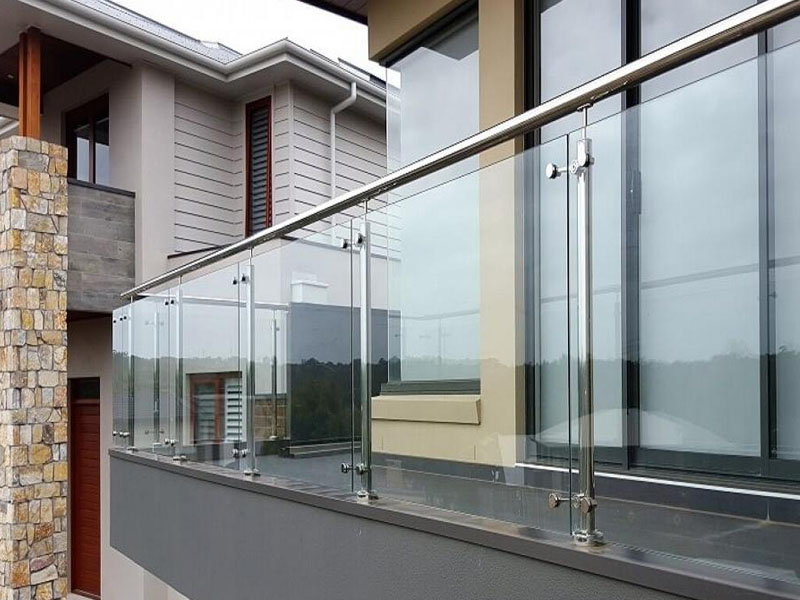
Which Material Offers More Design Flexibility
If appearance is an important part of your project, both materials provide plenty of options.Stainless steel naturally provides a distinctive metallic appearance. Brushed and polished finishes are commonly used for modern architectural projects.
Aluminum, however, offers an important advantage: extrusion allows manufacturers to create customized profile shapes.
A custom aluminum extrusion can incorporate:
Glass channels
Drainage features
Screw channels
Concealed fixing structures
Decorative elements
Different wall thicknesses
Integrated connection features
Aluminum profiles can also be powder coated in different colors or anodized to achieve different appearances.
This makes aluminum particularly suitable when you want the railing to match the building’s window frames, doors, facade, or other architectural elements.
Aluminum for profile customization and color options.
Maintenance: Do Aluminum and Stainless Steel Need Maintenance
Neither material should be considered completely maintenance-free.Outdoor railings are exposed to:
Rain
Dust
UV radiation
Humidity
Salt spray
Pollution
Stainless steel can develop surface staining or corrosion under unfavorable conditions, particularly when the wrong grade is used or contaminants are allowed to remain on the surface.
Aluminum with a high-quality powder coating or anodized finish can maintain its appearance for a long time, but the coating and installation environment still matter.
Regular cleaning is recommended for both systems, especially in coastal or polluted environments.
Winner: Both can be low-maintenance when properly specified and maintained.
What About Price
Price is more complicated than simply comparing the price per kilogram of aluminum and stainless steel.
The overall project cost typically depends on several factors, including:
Material costs + extrusion and fabrication + surface treatment + glass + hardware + shipping + installation + maintenance
Aluminum can provide cost advantages because of its low weight, efficient extrusion process, and relatively easy fabrication.
For large projects, these advantages can become more significant because transportation and installation costs may account for a considerable part of the total budget.
Stainless steel may cost more, particularly when using higher-grade materials and finishes, but it can be the preferred choice when a specific metallic appearance or material specification is required.
Instead of asking only, "Which material is cheaper?", buyers should ask:
"Which railing system provides the best total value for my project?"
Is Aluminum Strong Enough for Glass Railings
This is one of the most common questions buyers have.The answer is: properly designed aluminum railing systems can be suitable for many architectural glass railing applications.
But strength does not depend on the word "aluminum" alone.
Important factors include:
Aluminum alloy
Temper
Profile geometry
Wall thickness
Post spacing
Glass thickness and type
Fixing method
Anchor design
Load requirements
Installation conditions
For example, changing the cross-sectional design of an extrusion can significantly affect its structural performance without simply making the entire profile much heavier.
That is one reason working with an experienced aluminum extrusion manufacturer can be valuable when developing a custom railing system.
What Should You Ask a Railing Manufacturer Before Buying
Instead of asking only for a price, provide the manufacturer with as much project information as possible.A professional supplier should be able to discuss:
Material Specification
Ask about the aluminum alloy, temper, wall thickness, or stainless steel grade.
Surface Treatment
For aluminum, ask whether the profile will be anodized, powder coated, PVDF coated, or treated using another process.
Glass Compatibility
Confirm the recommended glass thickness and how the glass is secured within the railing system.
Installation Method
Ask whether the system uses a base channel, posts, clamps, side mounting, top mounting, or another installation method.
Customization
If you have a unique architectural design, ask whether the manufacturer can develop a custom extrusion profile instead of forcing your project to use a standard product.
Structural Requirements
For commercial or high-rise applications, make sure the railing system is designed according to the applicable local building codes and load requirements.
Aluminum vs. Stainless Steel: Which Should You Choose
Choose aluminum glass railing if you prioritize:Lightweight construction
Easy installation
Custom extrusion profiles
Multiple color options
Modern architectural appearance
Efficient large-scale production
OEM/customized designs
Choose stainless steel glass railing if you prioritize:
A traditional stainless-steel appearance
Premium metallic finishes
Specific stainless steel material requirements
Applications where stainless steel is preferred or specified by the project
For many residential and architectural projects, aluminum offers an excellent combination of corrosion resistance, lightweight construction, design flexibility, customization, and cost efficiency.
Why Choose a Manufacturer That Can Customize the Aluminum Profile
A railing project does not always fit a standard catalog.You may need a different:
Glass thickness
Profile width
Profile height
Wall thickness
Mounting method
Corner connection
Drainage design
Surface finish
Railing length
This is where custom aluminum extrusion becomes especially useful.
Shenghai Aluminum is an aluminum extrusion manufacturer that can support customized aluminum railing profiles from profile development and extrusion to surface treatment and further machining.
Depending on the project, customization can cover the aluminum profile design, dimensions, surface finish, cutting, CNC machining, drilling, and other fabrication requirements.
This means customers do not necessarily have to choose between a limited number of standard railing profiles. If your project requires a specific structure or installation method, the aluminum extrusion can be developed around those requirements.
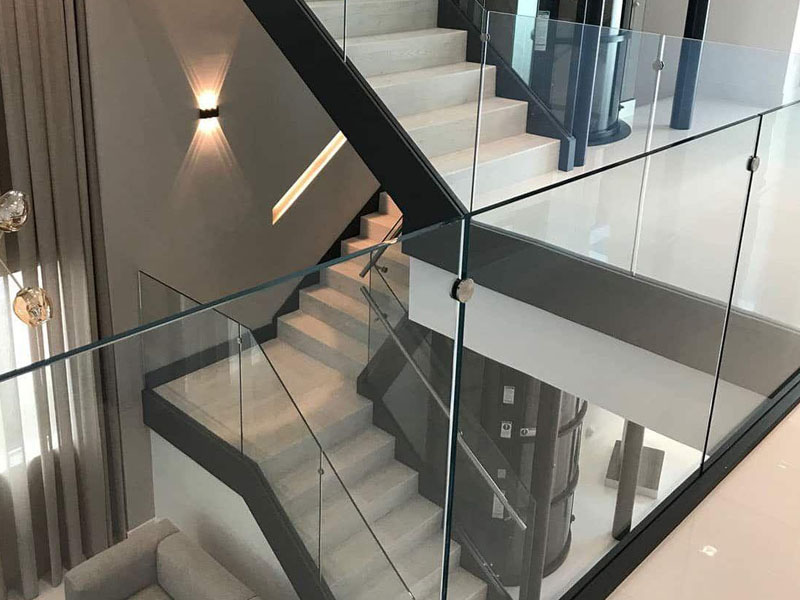
Aluminum Glass Railing Is Not Just About the Profile
A common mistake is to compare aluminum and stainless steel based only on the visible railing material.A complete glass railing system includes multiple components that work together:
Aluminum profile → glass → connectors → fasteners → anchors → surface treatment → installation
If one component is poorly selected, the performance of the entire system can be affected.
For example, a high-quality aluminum profile paired with inappropriate fasteners may still create corrosion problems. Similarly, a strong railing profile cannot compensate for an unsuitable glass specification or inadequate anchoring.
Therefore, the best approach is to evaluate the complete railing system, not just the material.
So, aluminum vs. stainless steel glass railing—which is better?
For many architectural applications, aluminum is an attractive choice because it combines light weight, corrosion resistance, profile customization, easy fabrication, flexible finishes, and efficient installation.
Stainless steel remains an excellent option when its specific material properties, appearance, or project specifications make it the preferred choice.
The right decision ultimately depends on your building location, structural requirements, glass specification, design, budget, and installation conditions.
If you are developing a custom aluminum glass railing system, Shenghai Aluminum can help you evaluate the profile structure, material, wall thickness, surface treatment, and machining requirements and develop an aluminum extrusion solution based on your project.
From custom aluminum extrusion to surface treatment and further processing, Shenghai Aluminum can provide a one-stop manufacturing solution rather than simply supplying a standard aluminum profile.