Aluminum Automotive Parts Applications & Solutions
Updated: 11 Aug 2026
Driven by the growth of new energy vehicles (NEV), stricter energy conservation and emission reduction standards, and the trend toward automotive lightweighting, aluminum alloys have become increasingly vital materials in modern vehicle manufacturing.
Compared to traditional steel, aluminum alloys offer advantages such as low weight, high specific strength, excellent corrosion resistance, superior thermal conductivity, and good machinability. Replacing certain steel components with aluminum alloys effectively reduces the vehicle's overall weight, improves fuel economy, and extends the driving range of new energy vehicles.
Currently, aluminum alloys are widely used in various automotive areas, including body structures, chassis systems, powertrains, battery systems, thermal management systems, and interior trim components. Shenghai Aluminum invites you to explore the specific applications of aluminum automotive parts and gain deeper insight into the industry, helping you find the right solutions for your projects.
Automotive crash beams
Body reinforcement beams
Door frame components
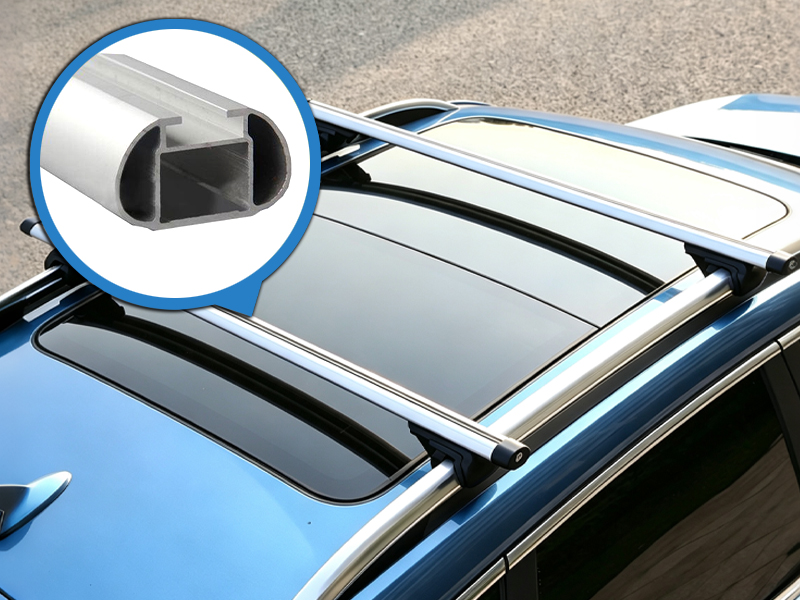
Roof rails
Body framework profiles
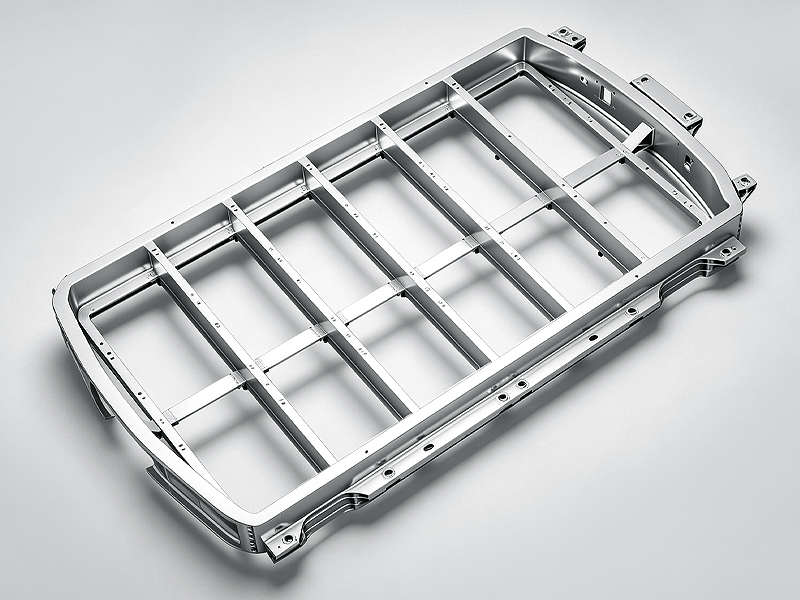
New Energy Vehicle (NEV) battery frames
Among these, aluminum roof rails and NEV battery frames have emerged as rapidly growing product categories in recent years. Thanks to their lightweight nature, high strength, corrosion resistance, and excellent surface finish capabilities, these products have seen widespread adoption in European and North American automotive markets.
For years, Shenghai Aluminum has provided global clients with customized aluminum automotive component solutions, offering one-stop manufacturing services, including aluminum extrusion, CNC machining, welding and assembly, and surface treatment. Our aluminum roof rails and EV battery frames have been exported to numerous countries across Europe and North America, earning recognition from automotive industry clients.
Due to their high strength-to-weight ratio, an increasing number of automakers are adopting aluminum alloys to replace traditional steel components, thereby reducing unsprung mass and improving vehicle responsiveness.
Aluminum control arms
Suspension brackets
Steering system components
Mounting brackets
Subframe assemblies
For instance, automotive aluminum lower control arms require strict dimensional tolerance control to ensure a precise fit with the vehicle's suspension system.
Thanks to its excellent surface finishing capabilities—which allow for a premium, refined metallic look—aluminum is extensively used in new energy vehicles (NEVs) and mid-to-high-end models.
Car door handles
Dashboard trim strips
Door trim strips
Seat structural components
Center console trim
This is particularly true in the new energy vehicle sector, where power batteries, electric motors, and electronic control systems demand increasingly high levels of heat dissipation performance.
Radiator components
Battery cooling plates
Cooling channels
HVAC system components
Heat exchanger structural parts
Aluminum extrusion technology enables the production of heat-dissipating profiles with complex internal flow channel structures, reducing overall weight while ensuring effective heat dissipation.
Aluminum Automotive Exterior Components
Due to their light weight, corrosion resistance, and aesthetic appeal, aluminum profiles are widely used for automotive exterior accessories.
Roof racks
Roof rails
Side steps
Exterior trim strips
Mounting brackets
Consequently, they have become a vital material for aftermarket modifications and exterior trim on high-end vehicles.
Drawing & 3D model analysis
Material selection
Manufacturing feasibility evaluation
2. Aluminum Extrusion Production
Custom extrusion dies
6000 series aluminum extrusion
Prototype development & mass production
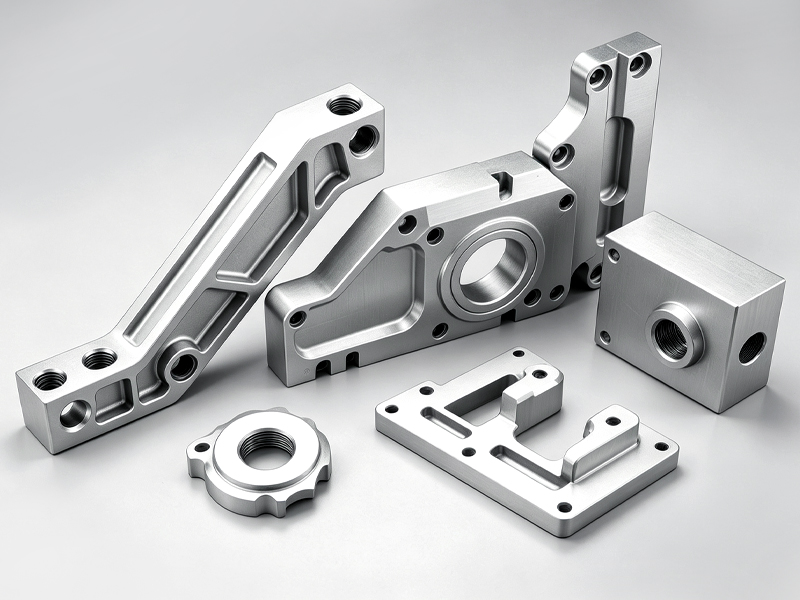
3. CNC Machining & Fabrication
CNC milling & drilling
Cutting, bending, welding, assembly
4. Surface Treatment
Anodizing
Powder coating
Sandblasting & polishing
5. Quality Inspection & Delivery
Dimensional inspection
Surface inspection
Material verification
 Thanks to their lightweight nature, high strength, corrosion resistance, and excellent machinability, aluminum alloys have become vital materials in modern automotive manufacturing.
From chassis suspension components and body structures to battery frames for new energy vehicles, thermal management systems, and interior trim, aluminum alloys are helping manufacturers achieve greater efficiency, reduced weight, and superior product performance.
As a specialist aluminum manufacturer, Shenghai Aluminum provides one-stop automotive component solutions—spanning extrusion, CNC precision machining, welding, and surface treatment—delivering customized aluminum products to global OEMs, component suppliers, and engineering firms.
Compared to traditional steel, aluminum alloys offer advantages such as low weight, high specific strength, excellent corrosion resistance, superior thermal conductivity, and good machinability. Replacing certain steel components with aluminum alloys effectively reduces the vehicle's overall weight, improves fuel economy, and extends the driving range of new energy vehicles.
Currently, aluminum alloys are widely used in various automotive areas, including body structures, chassis systems, powertrains, battery systems, thermal management systems, and interior trim components. Shenghai Aluminum invites you to explore the specific applications of aluminum automotive parts and gain deeper insight into the industry, helping you find the right solutions for your projects.
Aluminum Automotive Structural Components
Automotive structural components must meet stringent requirements for high strength, high rigidity, dimensional accuracy, and long-term durability. Aluminum extruded profiles are widely used in automotive structural systems because die design allows for complex cross-sectional geometries while maintaining low weight.Automotive crash beams
Body reinforcement beams
Door frame components
Roof rails
Body framework profiles
New Energy Vehicle (NEV) battery frames
Among these, aluminum roof rails and NEV battery frames have emerged as rapidly growing product categories in recent years. Thanks to their lightweight nature, high strength, corrosion resistance, and excellent surface finish capabilities, these products have seen widespread adoption in European and North American automotive markets.
For years, Shenghai Aluminum has provided global clients with customized aluminum automotive component solutions, offering one-stop manufacturing services, including aluminum extrusion, CNC machining, welding and assembly, and surface treatment. Our aluminum roof rails and EV battery frames have been exported to numerous countries across Europe and North America, earning recognition from automotive industry clients.
Aluminum Alloys in Automotive Chassis and Suspension Systems
Chassis and suspension systems directly influence a vehicle's handling, safety, and ride comfort.Due to their high strength-to-weight ratio, an increasing number of automakers are adopting aluminum alloys to replace traditional steel components, thereby reducing unsprung mass and improving vehicle responsiveness.
Aluminum control arms
Suspension brackets
Steering system components
Mounting brackets
Subframe assemblies
For instance, automotive aluminum lower control arms require strict dimensional tolerance control to ensure a precise fit with the vehicle's suspension system.
Aluminum Alloys in Automotive Interiors and Trim
Beyond structural components, aluminum alloys are widely used in automotive interiors and exterior trim.Thanks to its excellent surface finishing capabilities—which allow for a premium, refined metallic look—aluminum is extensively used in new energy vehicles (NEVs) and mid-to-high-end models.
Car door handles
Dashboard trim strips
Door trim strips
Seat structural components
Center console trim
Automotive Aluminum Alloy Thermal Management Systems
Aluminum alloys possess excellent thermal conductivity, making them vital components in automotive thermal management systems.This is particularly true in the new energy vehicle sector, where power batteries, electric motors, and electronic control systems demand increasingly high levels of heat dissipation performance.
Radiator components
Battery cooling plates
Cooling channels
HVAC system components
Heat exchanger structural parts
Aluminum extrusion technology enables the production of heat-dissipating profiles with complex internal flow channel structures, reducing overall weight while ensuring effective heat dissipation.
Aluminum Alloys in New Energy Vehicle Batteries
The growth of the new energy vehicle (NEV) sector has further driven the adoption of aluminum alloy components. Aluminum’s combination of light weight, high strength, corrosion resistance, and excellent heat dissipation makes it a key material for battery structural components. It is primarily used for: battery trays, battery housings, battery frames, cooling system profiles, and support structures.Aluminum Automotive Exterior Components
Due to their light weight, corrosion resistance, and aesthetic appeal, aluminum profiles are widely used for automotive exterior accessories.
Roof racks
Roof rails
Side steps
Exterior trim strips
Mounting brackets
Consequently, they have become a vital material for aftermarket modifications and exterior trim on high-end vehicles.
Common Aluminum Alloy Grades for Automotive Parts
Different automotive components have varying requirements regarding strength, machinability, and surface quality; therefore, specific aluminum alloys are selected to meet these needs.|
Aluminum Alloy Series |
Characteristics |
Main Applications |
|
6061-T6 |
High strength, excellent machinability |
Suspension components, brackets, structural parts |
|
6063-T5 |
Excellent extrudability, good surface quality |
Decorative trims, aluminum extruded profiles |
|
6082-T6 |
High strength, good corrosion resistance |
Automotive structural components |
|
6005A |
Balanced strength and extrudability |
Battery frames, automotive aluminum profiles |
|
7075 |
Ultra-high strength, excellent mechanical performance |
High-performance automotive parts |
Aluminum Automotive Parts Manufacturing Process
1. Engineering & Design ReviewDrawing & 3D model analysis
Material selection
Manufacturing feasibility evaluation
2. Aluminum Extrusion Production
Custom extrusion dies
6000 series aluminum extrusion
Prototype development & mass production
3. CNC Machining & Fabrication
CNC milling & drilling
Cutting, bending, welding, assembly
4. Surface Treatment
Anodizing
Powder coating
Sandblasting & polishing
5. Quality Inspection & Delivery
Dimensional inspection
Surface inspection
Material verification
From chassis suspension components and body structures to battery frames for new energy vehicles, thermal management systems, and interior trim, aluminum alloys are helping manufacturers achieve greater efficiency, reduced weight, and superior product performance.
As a specialist aluminum manufacturer, Shenghai Aluminum provides one-stop automotive component solutions—spanning extrusion, CNC precision machining, welding, and surface treatment—delivering customized aluminum products to global OEMs, component suppliers, and engineering firms.