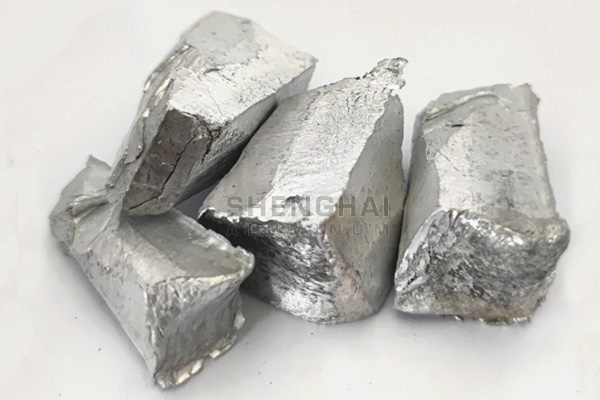
Aluminum 6061-T6 VS 7075
Updated: 16 Jan 2026
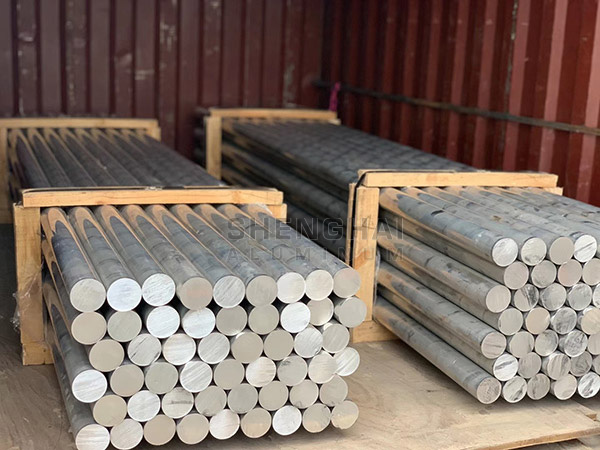
What Are the Differences Between Aluminum 6061-T6 and 7075
StrengthThe most notable feature of 7075 aluminum alloy is its outstanding strength. This type of aluminum alloy is currently the strongest, with a strength almost twice that of 6061-T6 aluminum alloy. If the project requires high hardness, it is the preferred choice. However, everything has two sides. With high strength, the toughness is somewhat reduced. If your product needs to be frequently bent or subjected to impact, 7075 is prone to cracking, and the subsequent after-sales service will be troublesome.
Although the strength of 6061-T6 is slightly lower than that of 7075, it is perfectly fine for 95% of industrial applications. The key point is that it is less likely to break under force, and there are rarely issues with insufficient strength in the later stages of the project. The cost performance is very high.
Machinability
Refers to the material's ability to respond to processing techniques such as cutting and drilling. Both of these alloys are easy to process. However, if higher machinability is required, 6061 aluminum alloy is the best choice. Processing does not require special tools; the tool wear is slow, and the surface finish is high. This means high machining efficiency and lower labor costs, making it especially suitable for batch production of regular profiles.
While 7075 has high hardness and requires special tools during processing, it wears quickly. To achieve the same surface finish, the machining processes and equipment parameters must be more precisely controlled. The machinability cost for complex structures is 2-3 times higher than that of 6061-T6. It is more suitable for small-batch, high-precision parts. If your order is for regular profiles, selecting 7075 will cost more.
Formability and Weldability
If your product requires bending, stretching and welding, you can almost ignore 7075 aluminum alloy.
6061-T6 aluminum alloy is primarily composed of magnesium and silicon and offers good formability and weldability. It is the preferred choice for conventional welding structures. 7075 aluminum alloy has high hardness and a higher zinc content, so its formability and weldability are inferior to those of 6061 aluminum alloy. Moreover, 7075 is extremely difficult to weld and prone to cracking after welding, resulting in a significant decrease in strength. If there are weld seams in your drawings, don't consider 7075.
In terms of formability, 6061-T6 has better ductility and can perform more complex bending and stretching. 7075 is too hard and brittle, prone to cracking, and suitable only for simple bending.
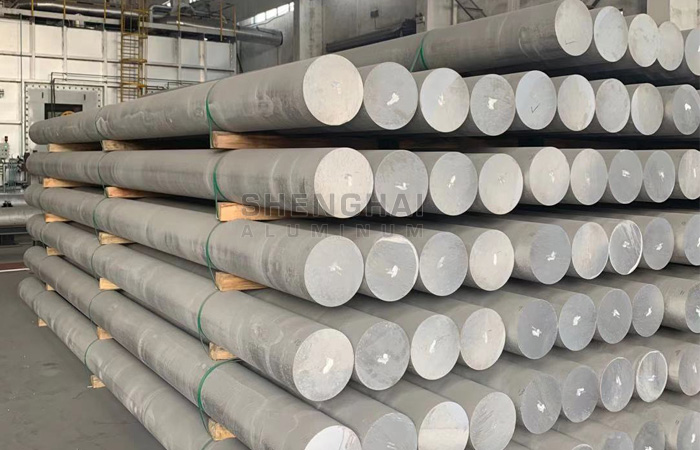
If your product is used outdoors, by the sea or in humid environments, corrosion resistance must not be overlooked.
The surface of 6061-T6 aluminum alloy naturally forms a very dense oxide film. It performs stably in humid environments and can effectively resist corrosion. 7075 must rely on a perfect surface protection process to have good corrosion resistance. Regular maintenance of the coating is required for long-term use. It is not recommended for outdoor or damp environments. We have provided 6061-T6 aluminum alloy profiles for project contractors specializing in seaside curtain walls. For three years, there have been no corrosion issues, and maintenance costs have been significantly reduced.
Anodizing
Anodizing is an electrochemical process that can transform the surface of a metal into a beautiful, durable and corrosion-resistant anodized layer.
To be honest, both materials can undergo anodizing. However, the 7075 anodizing process is a bit picky, and the anodized layer is prone to color variations and spots. Especially during mass production, it is difficult to control the color consistency.
The 6061-T6 anodizing process offers good compatibility and a rich color palette. Whether for dyeing or wood-grain transfer printing, the color difference during mass production can be controlled to a very small range.
Applications of 6061 and 7075 aluminum alloys
Although the formability and weldability of 7075 aluminum alloy are inferior to those of 6061, its high strength makes it irreplaceable in certain applications. As the industry's recognized "aviation-grade aluminum alloy", it is one of the top aluminum materials in terms of strength performance on the market at present. It is applied in the aerospace field, including aircraft landing gear, wing frames, and spacecraft structures, as well as in the high-end equipment field: high-stiffness frames, unmanned aircraft bodies, heavy-duty industrial mechanical arms, and in special fields: some high-strength structural components of defense equipment, and high-maintenance sports equipment.
6061-T6 is widely used across various industries and fields due to its broad range of applications, ease of machining, high strength, corrosion resistance, and excellent weldability. It is the first choice for conventional projects such as architectural decoration, doors and windows, industrial frames, and civilian manufacturing.
Thermal Conductivity
Thermal conductivity determines the heat dissipation capacity of aluminum alloys. Both 6061 and 7075 aluminum alloys exhibit heat-treatment strengthening, but there are clear performance differences between the two. Although 7075 has a much higher hardness than 6061, its melting point and thermal conductivity are lower. 7075 aims for extremely high strength, so it is only suitable for "high strength priority over heat dissipation" special scenarios. While 6061 has better thermal conductivity, it is better suited to scenarios that require heat dissipation. For example, in applications such as electronic device casings and motor end covers that require rapid heat dissipation, 6061 can meet heat-dissipation requirements while maintaining structural strength.
Mechanical Property Comparison of 6061 and 7075 Aluminum Alloys
Due to the different types and concentrations of alloying elements, the mechanical properties also vary.
|
|
Type 6061 Aluminium |
Type 6061 Aluminium |
Type 7075 Aluminium |
Type 7075 Aluminium |
|
|
Metric |
English |
Metric |
English |
|
Yield strength |
276MPa |
40,000 psi |
503MPa |
73,000 psi |
|
Modulus elasticity |
68.9GPa |
10,000ksi |
71.7GPa |
10,400ksi |
|
Thermal conductivity |
167 W/m-K |
1160 BTU-in/hr-ft2_0F |
130 W/m-K |
900 BTU-in/hr-ft2_0F |
|
Melting point |
1080-12050F |
582 - 6520C |
890-11750F |
477-6350C |
|
Electrical resistivity |
3.99 x 10⁻⁶ ohm-cm |
3.99 x 10⁻⁶ ohm-cm |
5.15 x 10⁻⁶ ohm-cm |
5.15 x 10⁻⁶ ohm-cm |
|
Hardness (Brinell) |
95 |
95 |
150 |
150 |
|
Machinability |
Good |
Good |
Fair |
Fair |